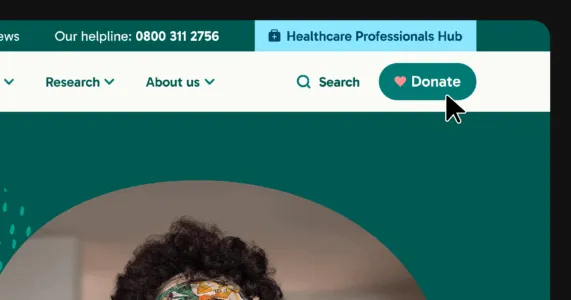

Why donor research matters for charity websites

So far in 2025, 60% of all charitable donations have been made online(*) and more than half of those donors chose to give directly through a charity’s own website(†). What does this tell us? That your digital presence matters!
But, a website isn’t just a shop window. It’s a bridge between your charity and your supporters, so in order for it to be successful, it must work for both of you. It must help your charity meet its goals while also having the user’s needs in mind.
The Nielsen Norman Group found that most people visit charity websites with two questions in mind: ‘What does this charity stand for?’ and ‘How will my money be used?’
Fewer than half of the homepages they studied answered the first question clearly and only 5% addressed the second. Unsurprisingly, this lack of clarity led many people to abandon the donation process altogether, leaving many organisations missing out on critical support.
At the heart of it, this is about trust. Donors want to believe in the work you do, and they want to feel confident that their money will make a difference. If your website doesn’t help them do that quickly and clearly, they’ll go elsewhere.
To fix this, you really need to get to know your users and understand what makes them tick. This is where the research comes in.
(*) Enthuse, Charity Pulse Report 2025
(†) The Nielsen Norman Group, ‘Attracting Donors and Volunteers on Non-Profit and Websites’

Donor research and UX
Getting to know your supporter base is key for helping you shape a platform that’s going to help more users engage with your causes, connect with your values, and inspire them to support.
UX research can help us gain these insights and provide strategic recommendations for your charity website, tailored to your users. Through UX research we can better understand what people are trying to do on your site, where they get stuck, and what they need to feel confident in your cause. It moves you beyond internal assumptions and shows you what’s really happening when someone visits your site.
For charities, that might mean uncovering why people abandon donation forms, miss out on volunteering opportunities, or question your legitimacy. Without that insight, you won’t know where the challenges and opportunities lie. Ultimately, you risk losing support and missing out on the long-term relationships that drive your mission forward.
UX can help to uncover issues that may have previously been overlooked and ensure your website is optimised, engaging and easy-to-use.
The Nielsen Norman Group’s research showed that:
- 50% of lost donations were caused by usability issues, like cluttered pages or confusing navigation.
- 43% were due to unclear content, such as vague messaging or jargon-heavy language.
- 13% of users couldn’t even find the donate button.
So, it is easy to see why understanding your donors’ experience and needs can have a huge impact on growing and sustaining support for your charity.

Our UX research toolkit
At Studio Republic, we help charities centre users in every part of their digital experience and harness insights gained from donor research to grow their impact.
Our UX research toolkit gives us everything we need to better understand your users and make recommendations to enhance your website and support your mission.
Our UX research toolkit includes:
- UX audits to spot design and navigation issues
- User surveys and interviews to hear directly from donors and supporters
- Usability testing to see how people actually use your site
- Content audits to identify gaps, repetition or unclear messaging
- Card sorting and tree testing to improve your site structure
- User personas based on real people to guide better decision-making
Together, these tools give a clear picture of what’s working, what’s not, and what to prioritise next. The result is a website that removes friction, builds trust, and encourages action, whether that’s making a donation, signing up to volunteer, or simply learning more about your cause.
We’ve seen first-hand how powerful this approach can be. When you take time to listen, test and adapt, your website becomes a space where people feel connected, informed and inspired to support your mission.
If you’re ready to understand your users better and give them the experience they deserve, get in touch.
Are you ready to take the next step in your UX journey?
Email us
or give us a call: 01962 659 123