How to create a charity homepage with impact

Introduction
Your website homepage is usually someone’s first encounter with your charity. Within moments, people should be able to understand what your charity does, why it matters and how they can support.
This is your opportunity to make a strong first impression, spark curiosity and give people a reason to explore further. By getting it right, your homepage can do more than introduce your charity. It can help turn initial interest into meaningful engagement and ultimately, long-term support.
But, what makes a great homepage?
It’s more than just a striking design or a powerful headline. It builds trust, communicates your purpose and creates genuine connections with your audience. From supporters and funders to volunteers and people seeking help, your homepage needs to speak fluently to different audiences and help them find what they’re looking for.
Research suggests it can take as little as 50 milliseconds for someone to form an initial impression of a website’s visual appeal. That leaves little time to capture attention and makes every design choice count!
So, how do you create a charity homepage that does all this? Let’s look at where to get started.
Start with your audience
A great charity homepage needs to balance two things: help people find what they need and bring your organisation’s purpose, values and impact to life.
With diverse audience groups, this means that not everyone will want the same thing from your website. Some may be looking for immediate support, others may want to understand your mission, make a donation, access resources or discover how to get involved.
Really understanding these different needs is essential before making decisions on your homepage’s content, structure and design. It saves you from making assumptions and helps to tackle potential barriers effectively.
This is where audience research comes in. Through interviews, surveys and usability testing, you can better understand your users and uncover actionable insights to make your site work for them. From tailored user journeys, clear signposting and sleek navigation, users can find content and information that matters to them most.
Tell a story that connects with people
Storytelling is a powerful way to communicate your charity’s purpose and the difference you make. Ultimately, it’s about building connections.
We connect with characters because we understand challenges they face, what’s at stake and where there is hope. The same thinking can help you communicate your charity’s impact and bring its mission to life.
Think about the challenges your organisation exists to solve, the people you support and the difference your work makes to their lives. How can you communicate this in a way that feels meaningful and resonates with different audiences?
You don’t need to overcomplicate the message or rely on emotional language to do this. Instead, combining a clear statement about your mission illustrated with authentic stories can be more powerful.
Real stories, testimonials, meaningful statistics and engaging imagery can all help bring your work to life in a way people can relate to. It gives people a reason to care, build trust in your organisation and inspires them to join your story.

Make your priorities clear
Your homepage can’t give everything an equal share. So, deciding what matters most can help you determine the actions you want people to take and how to take them.
Start by identifying your website’s primary goal. If fundraising is a priority, you might want to give donations greater prominence through a clear call to action or a dedicated homepage banner. For a membership organisation, this might be encouraging people to join. Alternatively, if your charity provides urgent support, helping people access that support they need should be your priority.
Once you’ve established your primary call to action, you can then think about your secondary goals and how these support the needs of different audiences.
Create a clear hierarchy
The order in which you present information can have a real impact on how people engage with your website and what action they might take.
Your charity’s homepage should feel like a connected journey, not a collection of unrelated content blocks. Each section has a role to play in bringing your charity’s purpose to life, showing the difference you make and helping people understand what they can do next.
This is done through visual balance and creating harmony between all the elements on a page. This means looking at a homepage as a whole composition, rather than making decisions about each section in isolation.
Too much content can make it difficult to know where to focus, while too little may leave visitors without the information or reassurance they need. The same applies for balance between text and imagery, and how each section encourages people to continue exploring.
Having a clear content hierarchy helps you strike that balance, guiding people through your homepage in a logical, engaging and purposeful way. Your audiences should be able to find the content and information they need without having to work hard for it.
This means making user journeys easy to follow through your homepage, main navigation and relevant internal pages. Providing multiple routes to important content gives visitors more opportunities to find what they need and helps the experience feel intuitive.
Using contrasting differences in colour, scale, typography and layout can also help distinguish headings from body copy, draw attention to important calls to action and separate different areas of content.
The key is to be intentional and avoid repetition that can make the pages feel monotonous and predictable, while still bringing variety to an intuitive experience.
Build trust through thoughtful visual design
Trust is essential for charities. People may be deciding whether to make a donation, access a service, share personal information or get involved in supporting your mission. The way your homepage looks and feels can influence how confident they are in taking that next step.
Visual design plays a role in building this confidence. A balance of considered typography, colour, imagery and layout helps people recognise your charity and understand who you are. A well-designed, flexible design system will allow you to introduce variety while maintaining recognisable identity.
Thoughtful design creates the conditions for visitors to engage with your content. Every piece should serve a purpose, whether that’s building confidence, communicating impact or helping people take action.
Some of our favourite elements to use on homepage designs include:
- Statistics to communicate the scale and impact of your work
- Testimonials to share personal stories with and an authentic human perspective
- Card grid to link to important sections of your site and help people find the content they need
- Calls to action to create an onward journey and meaningful next steps
- Featured banners or text and media to provide compelling visual impact to short-form written content
But, remember that even with fluid design, the information on your site itself should always be clear, honest and credible. This means regularly reviewing your homepage to ensure it consistently reflects your charity’s priorities, work and mission.
For more information on how to update your website’s pages, click here.
Use imagery to bring your purpose to life
The right imagery can help people connect with your cause in a way that words alone cannot. Compelling images can communicate emotion, make your work feel real and help people connect with the difference your charity makes.
But choosing the right images is more than just picking a beautiful picture. It is also about finding visuals that tell the right story, reflect your values and work effectively within your homepage design.
For charities, authenticity is important. Real photographs of your work, communities and people can help build a meaningful connection with your audience and see the human impact. Consider whose stories you’re telling, how they’re represented and whether your imagery reflects the people and communities your charity serves.
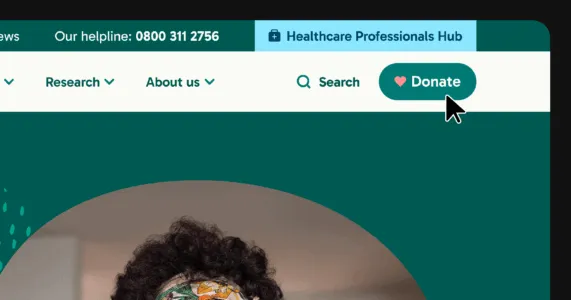
How you use your imagery also makes a difference. A full-width homepage banner is the very first thing a user will see, so it needs an image that is strong and that can accommodate different viewport dimensions without losing its main subject. If text sits over the image, make sure to choose photography with suitable negative space rather than forcing text into an already busy composition.
Finally, consistency is key. Consider how photography, illustration, video, animation and graphic elements work together with your brand identity. It doesn’t mean everything has to look the same, but it should feel like part of a common style, tone, and experience.
So, if you’re feeling inspired to start a journey to a new charity website, looking to improve your existing homepage or simply want to understand how well it’s performing, we’d be happy to help.
Explore how we can help your website make a greater impact
The better you know your audiences, the more you can do for them. Whether you want to understand your supporters, fix a journey that isn't working or reach people you're missing, research gives you the evidence to act. Find out more about our audience research service.
Email us
or give us a call: 01962 659 123